Neighbourhood overview
A compact suburb with a generous sense of place
South Melbourne is an inner suburb of Melbourne, Victoria, immediately south of the Yarra River and only a short trip from the central city. Its postcode is 3205, and it sits within the City of Port Phillip local government area. The 2021 Australian Census recorded 11,548 residents, with a median age of 39, giving the suburb a mix of established households, apartment residents, professionals and long-term locals. The area is dense enough to be walkable, yet its terraces, pocket parks and broad heritage streets give it a distinct neighbourhood scale.
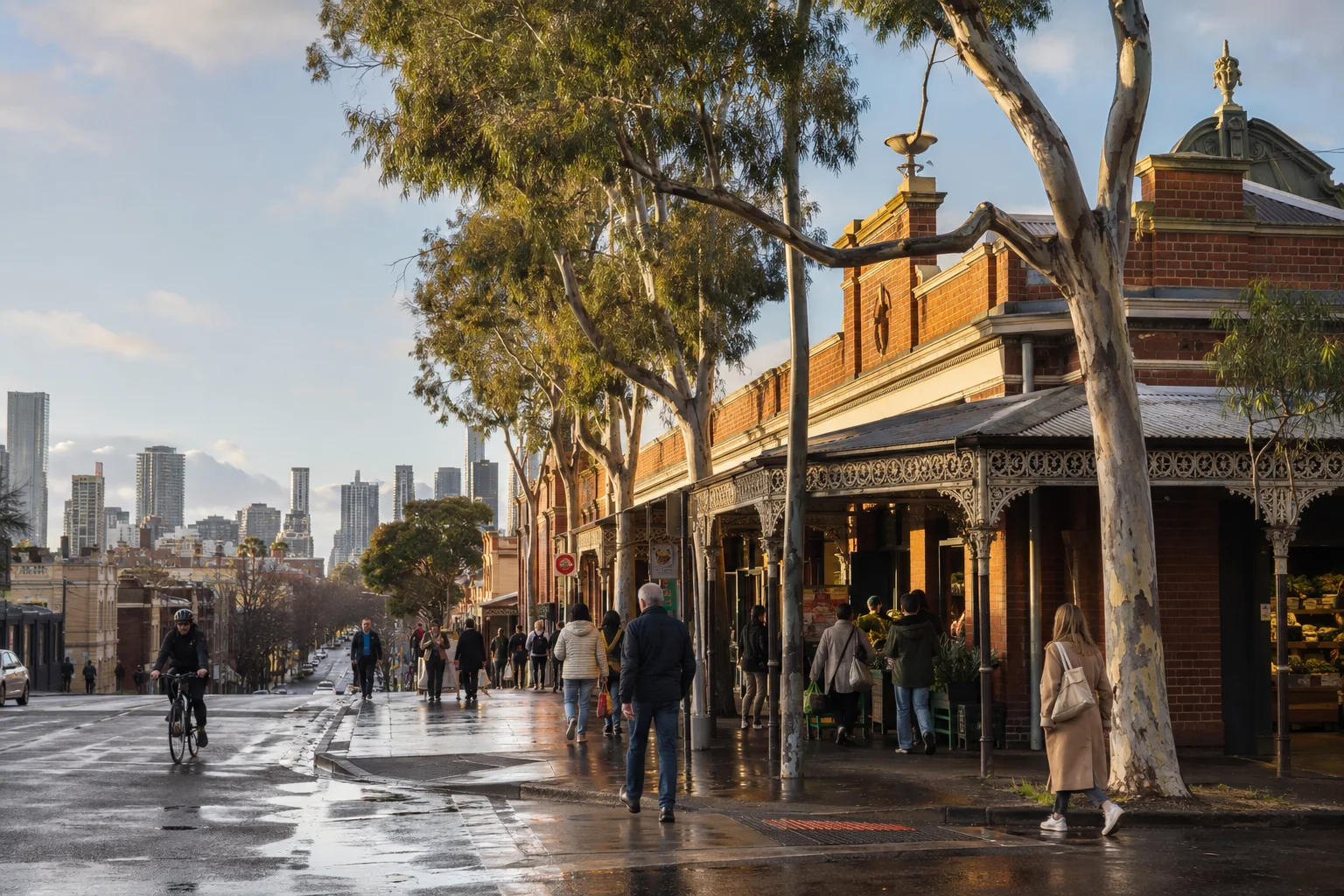
The South Melbourne Guide focuses on the practical character of the suburb rather than treating it as a checklist. Clarendon Street provides the main commercial spine, while Coventry, Cecil, York and Park streets add smaller clusters of shops, dining rooms and useful everyday services. Tram routes 1, 12 and 96 help connect the area with the Melbourne CBD and nearby districts, making a car optional for many visits.
Food and coffee
Market produce, serious coffee and easy local dining
South Melbourne Market is the suburb’s defining landmark and a reliable place to understand its food culture. Established in 1867, it is Melbourne’s oldest continually operating market. More than 140 stalls bring together fruit and vegetables, seafood, meat, deli goods, homewares and casual eating. The surrounding Cecil Street dining strip extends the market atmosphere beyond shopping hours, with operators such as Claypots Evening Star and Clement Coffee woven into the precinct.
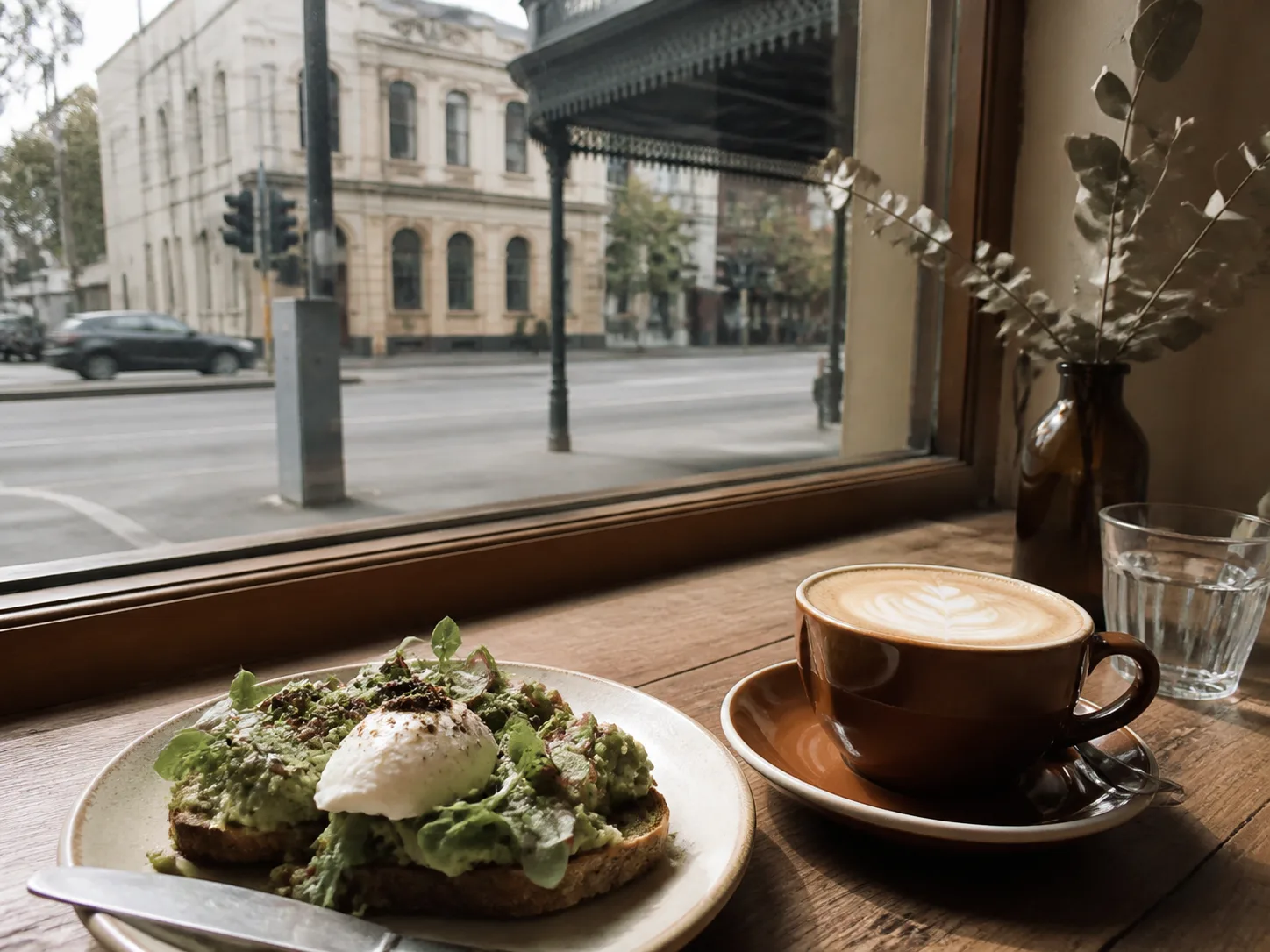
Beyond the market, the suburb has a strong café and restaurant identity. ST. ALi helped build Melbourne’s specialty-coffee reputation from Yarra Place, while The Kettle Black is known for polished brunch near Albert Road. Proper & Son offers a market-side breakfast and lunch option, and Bellota Wine Bar, Peko Peko and the Palace Hotel show the range available after dark. Venues evolve, so it is sensible to confirm opening hours and bookings directly before visiting.
Community and recreation
Places to gather, move and spend time outdoors
Local life is supported by community facilities as well as hospitality. The South Melbourne Community Centre, at Ferrars Place and Park Street, provides bookable halls and spaces where groups can meet, learn and run activities. Sol Green Community Centre and the adjoining reserve add another neighbourhood focus, with the reserve’s renewal including an expanded basketball court, a netball ring, accessible play equipment, shade and improved paths.
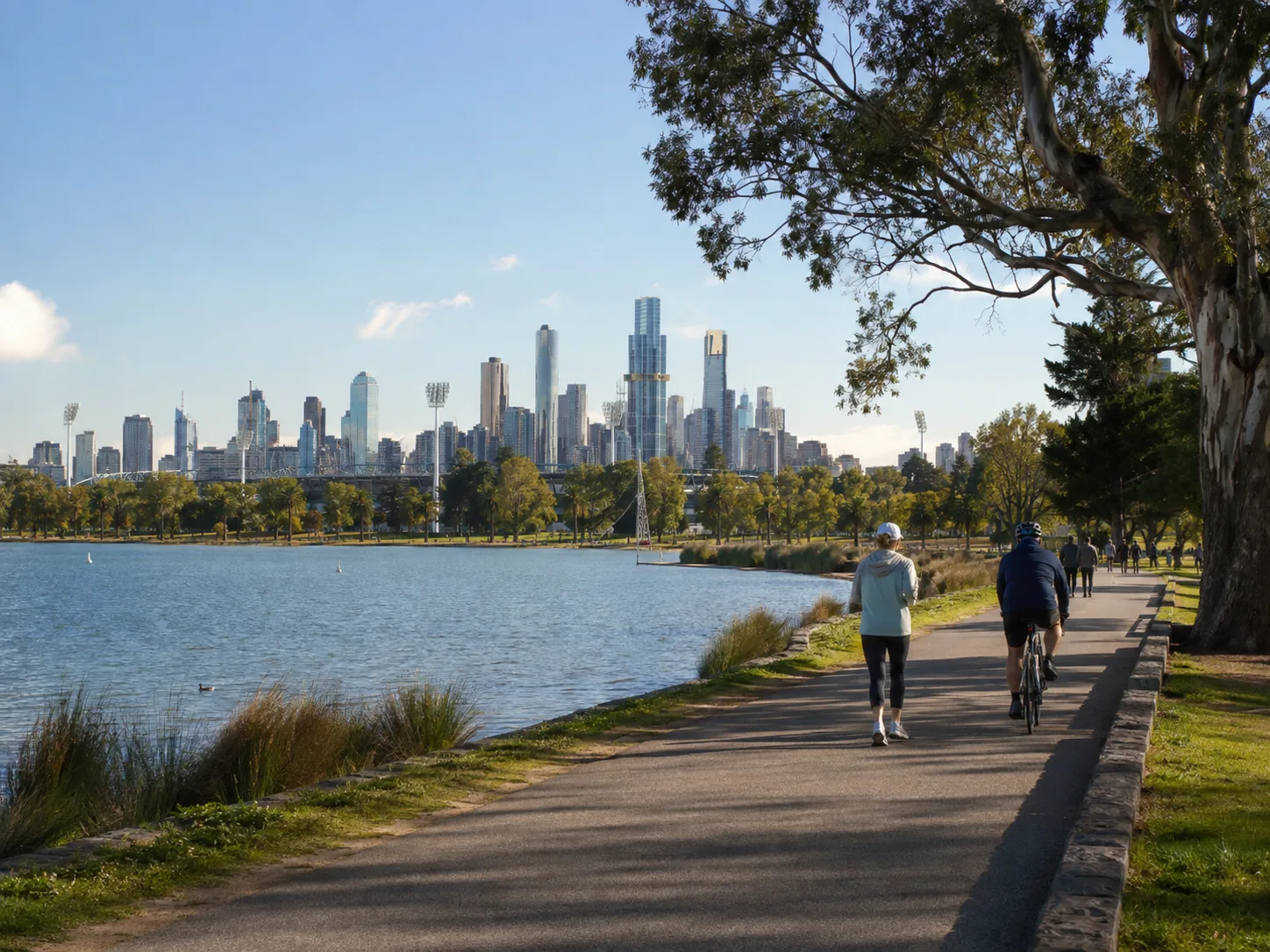
For larger sporting facilities, adjacent Albert Park broadens the options considerably. The Albert Park Lake circuit is popular for walking, running and cycling, while the Melbourne Sports and Aquatic Centre provides swimming, indoor courts and fitness facilities. The surrounding park also includes public golf and driving-range options. These assets sit just outside or along the edge of South Melbourne, but they are part of the suburb’s everyday recreational landscape and are readily reached on foot or by bicycle.
Landmarks and connections
Heritage details with Melbourne on the doorstep
The market is only one part of South Melbourne’s built history. The imposing South Melbourne Town Hall rises over the former Emerald Hill civic precinct, while the Portable Iron Houses preserve rare examples of prefabricated Gold Rush-era housing. St Vincent Gardens, with its formal landscape and surrounding Victorian terraces, sits close to the suburb’s southern edge and rewards a slow walk. The contrast between this heritage fabric and newer apartments near Southbank and Fishermans Bend is one of the area’s most recognisable qualities.
Five useful surrounding suburbs to know are Southbank, Port Melbourne, Albert Park, Middle Park and the Melbourne CBD. Southbank adds riverfront dining and arts venues; Port Melbourne leads towards the bay; Albert Park and Middle Park offer leafy streets and recreation; and the CBD places major transport, shopping and cultural institutions within easy reach. Together they make South Melbourne a practical base for exploring a broad section of inner Melbourne without losing the feel of a self-contained local centre.
Whether the priority is fresh market produce, a carefully made coffee, a community venue or a heritage walk, South Melbourne works best at street level. The South Melbourne Guide brings those layers together in a calm, useful format, helping readers understand not only what is here, but how the suburb fits into the wider city.